
- Canvey Wick on the Thames Estuary has recorded more than 3,200 species of invertebrates, birds and plants. It was the first brownfield site to be protected specifically for invertebrates and given SSSI status in 2005.
- Originally the site of a proposed oil refinery before being left abandoned for 30 years, habitat efforts have helped maintain the brownfield site as a flower-rich grassland that supports rare invertebrate species such as the Shrill Carder Bee (Bombus sylvarum), with the number of Nightingales also increasing in recent years.
- As the UK’s wildlife faces declines, Canvey Wick is a shining example of how brownfield sites can be rich in, and deliver for, nature. With the right management, these spaces can be thriving biodiversity hotspots and challenge the conventional idea of what nature reserves should look like.
Canvey Wick is a 93-hectare brownfield Site of Special Scientific Interest (SSSI) in Essex. Twenty years on from gaining special protection, the site has now recorded more than 3,200 species. This total includes species recorded in the early 2000s that helped secure the designation. Thanks to the combined efforts of the RSPB reserve team, volunteers, local wildlife recorders, partners at Buglife and land owners, the Land Trust, this “brownfield oasis” is now home to some of the UK’s most threatened invertebrates and a growing number of Nightingales.
The site was historically used as grazing marshes in the 1970s before being prepared for development as a potential oil refinery. Whilst this was eventually abandoned, initial site works involved covering and raising the grazing marsh with sediment from the Thames. The resulting habitat found there today has formed an open mosaic of flower rich grassland – perfect for invertebrates. Canvey Wick is managed by the RSPB in partnership with Buglife on behalf of national land management charity the Land Trust.
Of the 3,200 species recorded, 11.7% are considered rare, scarce, threatened or near threatened. This includes the Shrill Carder Bee, which gets its name from the high-pitched buzz made when flying. Their pale straw colour, distinctive black band on the thorax and orange tail gives this dainty bumblebee a unique appearance. Its UK population has seen steep declines due to loss of suitable flower-rich habitat and is now restricted to a handful of locations. This includes along the Thames Estuary such as at Canvey Wick, the South Wales coast and Somerset Levels. As a priority species for the RSPB, the protected brownfield site has offered the bee a lifeline.
Nature reserve manager, Marc Outten, said: “Canvey Wick is a hugely important place for wildlife. We are proud of the role our reserve team, volunteers and partners have played in maintaining such a rich habitat. The wildlife found here includes some of the most threatened in the UK, such as the Shrill Carder Bee, and to see them benefit from our efforts is something to be celebrated – more than 3,200 species is a fantastic success.”
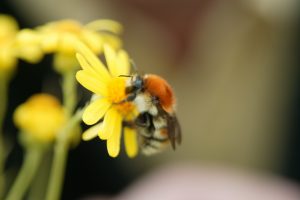
Removal of invading scrub and restoring grasslands has created ideal conditions for invertebrates. More than 250 species of bees, wasps and ants have been recorded, including the Brown-banded Carder Bee (Bombus humilis), Five-banded Weevil-wasp (Cerceris quinquefasciata) and Carrot Mining Bee (Andrena nitidiuscula). The myriad of flowers, such as everlasting pea, trefoils and vetches, all provide invaluable food. Habitat management at Canvey Wick not only supports invertebrates but also a range of other wildlife. Creation of bare sand areas through scraping is vital for basking reptiles – the site being a hotspot for Adders, Common Lizards and Slow-worms.
There has also been a notable increase in Nightingales. In 2021, 11 territorial males were recorded during the RSPB’s breeding bird surveys. The following year, major habitat restoration works were undertaken at Canvey Wick for the benefit of the site’s rare invertebrate communities and it became clear that Nightingales needed to be factored into the planning of this. Working with territory mapping and vegetation structure data, the site team actively avoided clearing certain scrub areas for the benefit of Nightingales. As a result, 2023 saw an increase to 13 singing males with 21 recorded in 2024 – a 61% increase on the previous year. In 2025 that number stayed consistent at 21 territories.
Marc continued: “Striking a balance between clearing and avoiding scrub for the benefit of the local Nightingale population whilst maintaining the open flower-rich grasslands and bare ground for rare invertebrates, was a challenge made easier by data collected by local specialists, the reserve team and volunteers. This important data informed discussions with Natural England and our partners, the Land Trust and Buglife. The clear impact of work completed at the reserve, alongside the decision to leave some scrub areas untouched, can be seen in the increase of Nightingale numbers at Canvey Wick.”
Alan Carter, CEO of the Land Trust, said: “Canvey Wick demonstrates how brownfield sites can be transformed into vibrant green spaces that serve the community and provide important habitats for wildlife. We are extremely proud of the regeneration efforts carried out since taking on the ownership of the site in 2012. We have then put the amazing team partnership in place to manage the site, the RSPB, Buglife, and community volunteers. The site is now among the top locations in Britain for endangered invertebrates, an impressive achievement.”
Find out more about Canvey Wick and its history here.
Main Image Credit: Canvey Wick © Claudia Watts