
…a blog by Buglife Saving Sites Officer, Gemma Waters.
I was first introduced to the importance of brownfield sites for wildlife over 20 years ago at a conference specifically about previously developed land. I heard about the Dingy Skipper (Erynnis tages) butterfly and how vital brownfields habitats are to saving its declining populations. It may be a small brown butterfly, but with its beautiful markings, it is far from dingy! The Dingy Skipper is joined by many other rare and even endemic invertebrates that are increasingly or solely reliant on brownfield sites for survival. This includes the fantastically named Horrid Ground-weaver (Nothophantes horridus), a Critically Endangered money spider whose entire world population resides in a handful of old quarry sites in Plymouth. The Shrill Carder Bee (Bombus stylvarum), one of the most threatened bumblebees in the UK relies on the network of brownfield sites across the Thames Estuary as a core area for its population. The bees can forage in the flower-rich habitats and find nearby areas of sheltered vegetation in which to make their nests, features that are becoming harder to find in the wider managed landscape. The unusual mosaic of habitats on brownfields, often alongside varied substrates and topography makes them brilliant for bugs.
As well as rare species, wildlife- rich brownfields can support nationally important invertebrate assemblages, with many identified as Important Invertebrates Areas. Hundreds or even thousands of species can be found, making them some of the most valuable sites for invertebrates in the UK. Brownfields can also be havens for rare plants, fungi, lichens, reptiles and birds- so truly biodiversity hotpots. This is all fantastic news! In the context of the current nature crisis, these sites can help drive nature recovery as well as act as important wild spaces for people to enjoy. However, there is an issue- they keep being built on!
Not all brownfields are equal
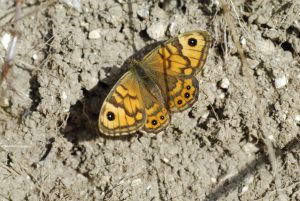
Buglife has been advocating for important brownfield sites for well over two decades. In that time, Buglife’s work, alongside the work of many others, has seen the designation of two amazing brownfields sites as Special Sites of Scientific Interest (SSSI) – Canvey Wick in Essex and Swanscombe Peninsula in Kent. Even better, three years of habitat restoration has just been completed at Canvey Wick by the RSPB, Buglife and Land Trust, to ensure the continuation of the flowery, open habitat mosaic that is so vital to its 2,900 species of invertebrates and other wildlife.
In over twenty years of campaigning and sharing knowledge through resources on the Brownfield Hub, Buglife has given a clear message that not all brownfields are equal. Some brownfield sites have little ecological value and are clearly suitable for development, while others are far from it- they are nature hotspots and deserve protection. This understanding, that not all brownfield sites can be considered fair game for development, is reflected in some elements of planning policy across all the UK’s countries. Brownfields are even represented in ‘Open mosaic habitat on previously developed land, a priority habitat type for conservation. However, there is still a strong ‘brownfield first’ approach in planning decisions and the false narrative persists that building on brownfield sites, any brownfield, is the right approach to prevent development in the green belt. Sadly, Buglife continue to see important wildlife sites come forward in planning applications and granted permission- despite the ongoing nature crisis.
Sites under threat
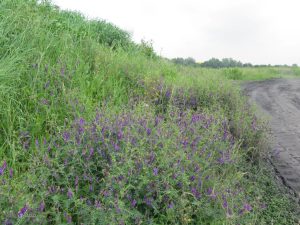
Arena Essex and Tilbury 3 are two active Buglife brownfield planning campaigns in the Thames Estuary. Despite both being home to nationally important invertebrate populations, recognised in their designation as Local Wildlife Sites, their futures hang in the balance.
Tilbury 3 would see further port expansion after the Tilbury 2 development went ahead on the former Tilbury Power Station, an already lost wildlife-rich brownfield. The open mosaic habitats now at risk from Tilbury 3 have been described by Natural England as “…without doubt of considerable importance for biodiversity, and is to the best of our knowledge, the single most important area for invertebrates across the North Thames area”. Almost 1,200 invertebrates have been recorded across the site, including the threatened Shrill Carder Bee.
Proposals by a Google subsidiary to build a Thurrock Data Centre campus at Arena Essex would see most of the open mosaic habitat destroyed, with no clarity provided on how this will be mitigated. Please consider signing our petition to get Google to search elsewhere and not build on this important wildlife site- an action already supported by over 26,000 people.
A vision for our most important wildlife sites
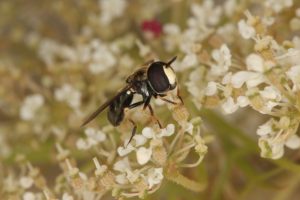
The fight to protect wildlife-rich brownfield sites and get them recognised as the natural assets that they are goes on, and with help from our supporters, Buglife will continue to stand up for these unique places. We have seen what can be achieved with sites such as the award-winning Canvey Wick, which provides an outstanding nature reserve for people and wildlife. The protection of Canvey Wick and Swanscombe Peninsula is a reality we can draw on to inspire our continuing campaign work. Whether a site is classed as brown, green or even grey doesn’t matter, it is the value of that site to nature and people that should be key in determining its future.
Main Image Credit: Tilbury Ashfields © P R Harvey