
…a guest blog by Radoslav Valkov, member of the Flemish Entomological Society and editor for their journal, Phegea. Radoslav shares his own thoughts and views on macro photography as an important aid in invertebrate conservation.
Quick production of high-quality photographic material is among the elemental methods of verifying scientific data, a requirement that has created a huge demand for improved efficiency of image capture technology. Photography is something more than a desirable skill in entomological science; it has evolved into an indispensable tool to empirically certify knowledge and facilitate surveying. Some field surveys can be complex in practice and necessitate ample technical knowledge and smooth routine to keep a well-structured and useful photographic record.
A complex and science-driven challenge
The foremost origin of macro photography when utilised with entomological purpose in mind, is determined by the actual survey intent. This is why the process of obtaining images that bear scientific weight is a specific type of photographic competence and proficiency, and a responsible mission. This is particularly tangible in field conditions when success is by no means guaranteed and the technical difficulties are considerably elevated. In such situations a synergistic effect of using different methods is present, such as techniques seen in studio macro photography, sports and bird photography. Thus, it is also important to know equipment well and determine its capabilities and responsiveness, as to avoid missed opportunities in critically important moments.
Photographing rare species – the added value of macro photography
In the context of growing amounts of data that requires the inclusion of photographic material, macro photography can be safely regarded as an invaluable convenience that advances both coarse and precise (where possible) identification of species. In addition, it supplies hands-on information on characteristic anatomical features, behaviour and ecological importance. Documenting rare species in a way that either draws sufficient attention to behaviour or shows an unusual record is a particularly important way to aid protecting invertebrate biodiversity.
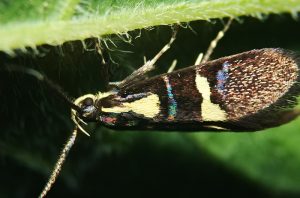
It is a demanding task to photograph species that are understudied or small enough to further complicate a study. Proper depiction of such detail requires care and dedication to the actual photographic process. There is a simple and logical mechanism: the more impressive visual output is supplied, the greater the intensity of the curiosity momentum. As happens sometimes, details that are valuable to entomology can be detected upon consequent examination of photographs, rather than during field observation itself. It would not be an overstatement to say macro photography should be credited as a central role in entomology for its ability to pinpoint details that are not instantly obvious.
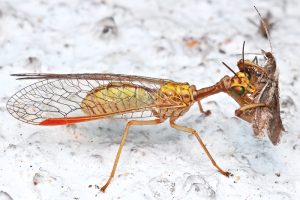
Mantispa aphavexelte is an incredible net-winged insect, an active predator with unique anatomical features that facilitate capturing and handling prey. Being a stunning and unexpected garden find; it turned out the detailed photographs revealed the astonishing external morphology of the forelegs. This record resulted in a particularly unconventional research paper published in the journal of the Flemish Entomological Society, Phegea in 2024. The work parallels morphological complexity and mechanical properties of the legs with various potential human surgery applications (based on similarities between the mechanical articulation of the mantisfly legs and known robotic human surgery systems). In this case, detailed photographs permitted the development of an interdisciplinary concept that emphasises the vital role of entomology, as well as categorising macro photography as a highly practical complementary visual aid. We still have so much to learn from invertebrates! But to do so, we need to document as much as possible in the best way the equipment at hand allows.
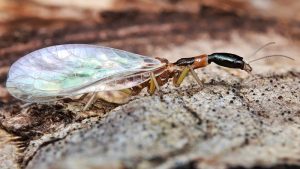
Another evolutionarily significant insect, the snakefly Xanthostigma xanthostigma, impresses with its look and life span in controlled conditions – 77 days. Despite many insects being short-lived, this one consumed aphids daily throughout the experiment. This observation prompts more detailed studies on its ecological significance and predation efficiency. Furthermore, its larvae can only survive in the presence of a nourishing habitat, e.g. under tree bark where larvae find other small insects to prey on. Moreover, encountering such a fabulous insect is an indication of an ecologically noteworthy and sustainable habitat mosaic that offers home to rare insects with sophisticated larval stages. The photograph below shows a very rare sighting – a freshly emerged imago resting on the bark of a Crack Willow tree. Such valuable moments will remain inconspicuous, if not purposefully sought and documented in detail. This is why macro photography in the field can be said to be an exciting and intricate form of wildlife photojournalism.
An invaluable source of knowledge on behaviour
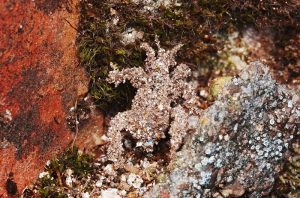
The Masked Bug Hunter (Reduvius personatus) is an assassin bug and among the most peculiar instances that proves invertebrates apply some ingenious strategies to remain out of the sight of other predators. Surprisingly, they also conceal their prey as much as possible underneath all debris accumulated from their natural habitat (on this occasion – an old building in the garden). As habitats of choice can significantly differ in build materials from man-made structures, immediate availability of sheltered areas and presence of other small arthropods to be preyed on, it is plausible to see the complexity of the camouflage process of the nymphs because of the inhabited area. Properties of the debris and particles can shape camouflage success, i.e. materials that generate build-ups with larger surface area and suitable colour-match appearance would increase camouflage success. Macro photography allows documenting interesting behaviour and comparing it in different habitats.
Macro photography presents a multitude of opportunities to explore and connect with the world of invertebrates and support important research, as Radoslav discusses. You don’t have to look far for your subjects, all of the photos in this blog were captured in Radoslav’s very own garden.
Radoslav is a Buglife Shutterbug – The Shutterbugs are a group of ‘buggy ambassadors’ who bring the focus back to the small things that run the planet, getting up close and personal, showcasing them in a whole new light, allowing us to really get to know these tiny creatures and giving us a fascinating insight into their lives. Meet more of our Shutterbugs here.
If you’re interested in trying out macro photography but don’t know where to start, explore our Photo Tips for Bugs page.
Main Image Photo Credit: White Plume Moth (Pterophorus pentadactyla) © Radoslav Valkov