
… a blog written by Buglife Programmes Manger, Jamie Robins
In recent months, we have witnessed a flurry of policy announcements from the Government which could have profound implications for our wildlife. This has generated headlines as our leaders have targeted nature for the slow pace of economic growth and made misleading claims to justify cutting vital nature protections.
But a new trend is emerging- vilifying the wildlife that underpins our very existence. Last week saw the Chancellor of the Exchequer, Rachel Reeves, not only ignore scientific evidence and sweep aside hard-earned environmental protections to ‘unblock’ the development of thousands of homes, but attack the most vulnerable wildlife of all.
Referring to Little Whirlpool Ram’s-horn Snails (Anisus vorticulus) – one of our rarest and most vulnerable molluscs – Reeve’s dismissed them as “microscopic snails that you cannot even see”. At 5mm long, this fragile and beautiful snail has been disappearing from the English countryside since the 1960s and is now found at only a handful of sites. Why has it been lost? Because we have lost grazing marsh to agriculture, insensitive infrastructure projects and nutrient enrichment. Instead of taking the necessary steps to make sure that nature bounces back from previous bad decisions and thrives, the Government is casting data and experience aside, and forcing through plans that could wipe it off the map.
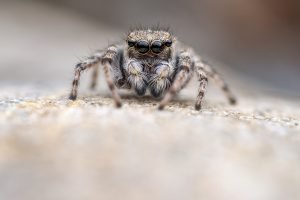
Earlier this year, in trying to shape nature as a ‘blocker’, The Prime Minister, Kier Starmer spouted claims of “Jumping spiders stopping an entire new town – and I’ve not made that example up”. Except that is exactly what he was doing. He was referring to the Ebbsfleet development in Kent which has already seen 4,000 homes built. It is indeed home to the Critically Endangered Distinguished Jumping Spider (Attulus distinguendus), but it lives nowhere near any planned housing.
Invertebrates underpin the ecological foundations of life, they pollinate wildflowers and crops, recycle nutrients, support soil health, naturally control pests, and provide food for birds, bats, fish, and other wildlife. Without them the UK’s ecosystems would collapse
Instead of protecting the tiny creatures that allow us to thrive, the Government is framing them as an obstacle that needs to be overcome. With assaults on our environmental protections and plans to unleash unchecked development on wildlife-rich landscapes and even our National Parks, it is unnerving to again see politicians not just ignoring the importance of invertebrates, but outright mocking them.
There is a need to build houses and to grow the economy, but this simply must be done by working with nature. The right developments, in the right places. We must stop scapegoating nature for the policy failures of previous generations and instead work with nature to meet growth aspirations and binding biodiversity commitments.
Main Image Credit: Little Whirlpool Ramshorn Snail (Anisus vorticulus) © Alex Hyde/Back from the Brink