
Hi, I’m Katie, the new Buglife Community Warden at Canvey Wick. Back in May, we waved a fond farewell to the previous Community Warden, Jo Loman, and RSPB Project Manager, Michelle Abel, at a celebration event which marked the end of a three-year habitat restoration project, delivered in partnership with the Land Trust and RSPB. I asked Michelle to explain what the restoration project involved, and why Canvey Wick is such an important site for nature:
Our three-year restoration project on Canvey Wick was completed in April, and it’s been encouraging to see diverse wildlife already making use of the newly restored habitats.
Canvey Wick was designated as a Site of Special Scientific Interest (SSSI) in 2005, for the important assemblages of invertebrates that inhabit its flower-rich brownfield grasslands, scrub edge and brackish ditches. This includes declining species like the Shrill Carder Bee (Bombus sylvarum) that has long thrived at Canvey Wick. Unfortunately, over time the open habitats have started to go through succession, meaning many of its grasslands were starting to become dominated by scrub and trees. The now completed project focused on restoring large open flowery areas of habitat for its important species. This project was delivered by a partnership of the RSPB, The Land Trust and Buglife, building on the successes of previous restoration of a smaller area of the nature reserve.
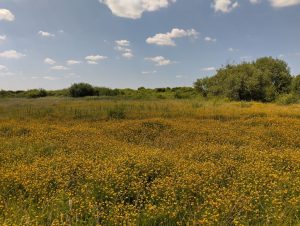
Our aims were to clear scrub, particularly Sea Buckthorn, open up choked ditches, and remove ground vegetation to expose the underlying sand. We wanted to join up the remaining small open areas and create diverse habitats with sandy mounds and hollows in the ground, some of which will remain wet in the winter.
We carried out breeding bird and invertebrate surveys each year, which helped us to plan which areas of the site to work on. We did territory mapping for Nightingales (Luscinia megarhynchos) to identify the breeding hotspots for this much known songster, so we could avoid clearing scrub in those areas. We also mapped out areas where rare plants have been found on site, so that machinery wasn’t driven near them, including lichens growing around the tarmac bases and along some of the pathways, as well as areas where orchids grow.
Over the three years, we cleared huge amounts of the fast-spreading Sea Buckthorn, created sandy mounds and cleared sections of the ditches, making them deeper and wider so they better retain water and are more beneficial for aquatic invertebrates. The cut scrub couldn’t be left on site as there was so much of it, so it was chipped down and recycled for biomass fuel.
We also cleared lots of scrap metal and hazards from Canvey Wick’s refinery past which were uncovered by the work. Essential bridge repair works on all ten bridges across the site was also vital to ensure safe access for site management and emergency vehicles.
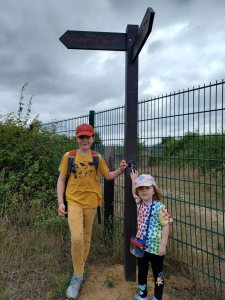
Waymarking posts, benches and notice boards have been installed throughout the whole site, with two walking loops marked out. Canvey Wick now has the Nightingale Trail for a longer walk of approximately 3.4km and Bumblebee Trail for a shorter 1.8km walk, as well as a Nature Trail through an area protected from too much disturbance for the benefit of wildlife. There are QR codes on most of the posts which link to information on the site and its wildlife and different themed rubbing discs. We were very happy to officially open the whole 93 hectares of Canvey Wick to the public in May, to allow the local community to explore and enjoy all that Canvey Wick has to offer.
Looking further into the future, management will continue to ensure the important open grassland areas do not succumb to scrub succession again; ditches will need to be cleared, and bare ground created. The partnership will continue to build on the knowledge gained from this restoration to inform future restorations and management at this iconic site.
The importance of Canvey cannot be understated and that’s why the RSPB, Land Trust and Buglife are committed to making sure the nature reserve continues to be a special place for wildlife and the local community.
Thank you, Michelle!
I look forward to seeing many of you in and around Canvey Wick over the coming months. For information about our upcoming events, why not join our Facebook community group. To download a map of the whole reserve and newly-opened trails click here: Canvey Wick Map