
…written by Buglife B-Lines Officer, Rachel Richards.
I don’t know about you, but I love the summer. Long sunny days and dreams of holidays, but I also love chilling in my garden with a cuppa; watching bees, solitary wasps, hoverflies and butterflies.
Perhaps you’re the same, or perhaps you enjoy a walk along a country lane where wildflowers abound and the air is a buzz with bumblebees and a fluttering with butterflies? Some of us are able to do this, but others are not so fortunate. These habitats, sadly, are not as widespread or as flower-rich as they once were.
If we create or manage their habitat well, providing flowers and nesting habitat, surely the insects will come, won’t they? Some insects can travel huge distances, even migrating hundreds of kilometres, crossing built up areas and chancing upon suitable habitat. Others don’t, they need connected habitats to move through the countryside safely.
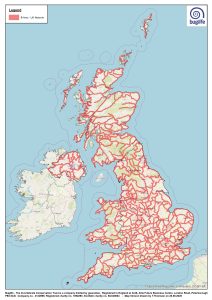
B-Lines is a simple yet powerful, shared initiative. It’s all about connecting up flower-rich habitats across the UK, creating pollinator pathways. A way to help those less mobile invertebrates, like some of our small solitary bees or tiny beetles, move into new habitats, widening their distribution, rather than finding themselves isolated in small patches of habitat as we add more roads and housing, often forgetting about their needs. B-Lines have been mapped right across the UK, providing prioritised pollinator pathways in each county. The interactive B-Lines map allows everyone and anyone to add their work for pollinators to the collective effort.
Everyone can and should get involved, people of all ages, individuals, organisations, community groups and even governments.
What can you do you might ask?
Most of us are busy with work, families, friends and some don’t have a garden, nevertheless there are things we can all do to help provide habitat for pollinators and other wildlife and, surprise, surprise, what’s good for nature has also been found to have mental and physical health benefits for us too. Time in nature, time outside in a calming green space can help us to de-stress, relax and feel more connected to our surroundings.
Buglife, and many other organisations, run B-Lines project across the UK, working to improve habitats for pollinators and other invertebrates, helping local rare and declining species to recover. Details of all our active and past project can be found on our project map, but we need your help to do more and reach all corners of the UK. Here are just a few suggestions of what you can do for pollinators:
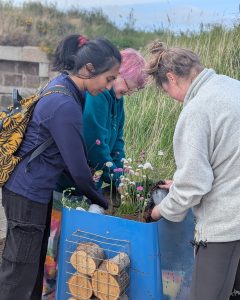
Add pollinator friendly plants to your garden/balcony or community space. Try and include different species which flower in the spring, summer and autumn, even at different times of the day or overnight (nighttime pollinators need our help too), and varied flower shapes to suit different pollinators. Remember double flowers or ones where there is no easy access to the flower centre (like many garden roses) may not provide pollen and nectar for insects.
Visit our Managing Community Spaces for Pollinators guide for lots of plant suggestion or for more ideas I can recommend the RHS Plants for Pollinators resources.
Leave areas of long grass with wildflowers in your garden, churchyard or school and talk to your local council about leaving sections of your local park or road verges to grow long through the summer. If after time there are few wildflowers you may wish to introduce native seed or plug plants. Remember these areas should ideally be managed at the end of the summer, by cutting them short and removing the cuttings to a composting area, off site if possible. This mimics a hay cut or grazing by animals and helps to keep soil nutrient levels low; this favours more wildflowers and discourages grasses from taking over.
If you need some help, or further information to share with your local council, we have guidance on our website specifically for local authorities and those who manage community spaces, roadside verges and parks.
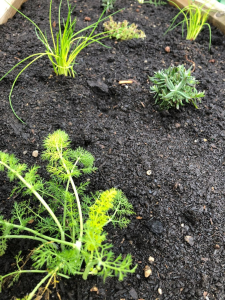
Grow your own fruit and veg. Many vegetables and herbs are unsurprisingly also very popular with pollinators – plants like tomatoes, strawberries, raspberries, apples, Rosemary, Sage, Fennel, etc. so why not have a go at growing your own? You could do this with a school group, a care home for the elderly or, if you don’t have a garden, try an allotment. Avoid the use of herbicides and pesticides, these are harmful to wildlife as well as us, and incorporate natural habitat such as a pond or hoverfly lagoon, a compost heap and bee or bug hotels if you have space.
Adding a pond, big or small, or a hoverfly lagoon will always bring more wildlife, even in a very small space. Remember to keep it topped up in dry weather, using water from a water butt if possible to avoid the chlorine in tap water. Many insects need water to complete their life cycle and birds and mammals are often in search of a drink, especially in the summer months.
Gardening for bugs doesn’t have to be big and showy and often doesn’t require a lot of space. We have lots of ideas, big and small, to help you on your journey in our Gardening for Bugs resources.
Don’t forget flowering trees and shrubs. Willow is one of the most popular plants for pollinators in the spring and the flowering sequence of native hedgerow plants are followed by emerging solitary bees and other insects that feed on them. If you have a hedge, consider adding a little more variety to it, ensuring there are different flowering shrubs which will also provide berries for birds later in the year. Fruit trees are popular of course with native pollinators, such as apples, pear, and plum but also native trees like Rowan and White Beam.
Once again you can visit our Managing Community Spaces for Pollinators guide for tree and shrub suggestions or the RHS Plants for Pollinators resources.
It’s now late in the year and most of us will struggle to find any pollinators, unless perhaps we stand beside some Ivy on a sunny day. Come next spring, when bumblebees come out of hibernation and hoverflies emerge or arrive on the wind from their migration, I’d like to think there will, with time, be more and more flower-rich, connected habitats waiting for them.
There are so many different ways in which we can all help to support pollinators that I hope you will find a way to join us, where ever you are, and add your work on to the B-Lines map, helping to inspire other to do the same.
Bumble in a meadow © Lucia Chmurova